
A sewer backup does not give you much warning, and the first hour matters more than anything after it. What you do in that hour decides whether you are cleaning a floor or replacing one. We have been a family-owned shop in Aurora since 2016, and we run main lines across the Denver metro year round. The calls that go best are the ones where the homeowner shut the water off before picking up the phone. Here is what to do, in order.
Stop adding water. Everything else is second.
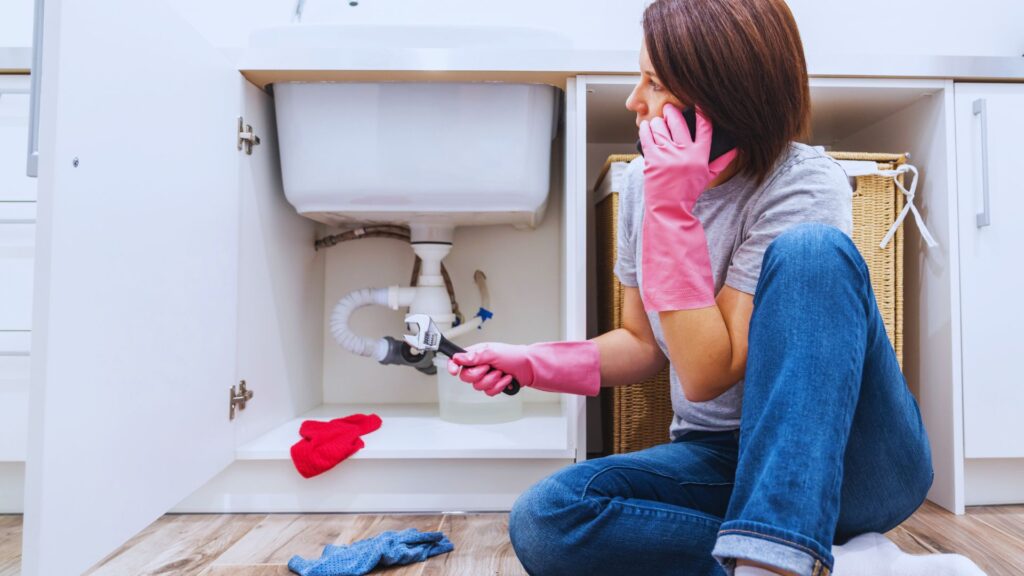
If a toilet is rising, a floor drain is bubbling, or water is coming up in a basement shower, stop running water anywhere in the house. No flushing, no dishwasher, no laundry, and no running the kitchen tap to see whether it drains. A main-line blockage turns every drain into a pathway to the lowest opening, so a washing machine on the main floor can push water out of the basement floor drain. Tell everyone in the house, because one well-meaning flush while you are on the phone with us undoes it. If the backup is coming from an upper-floor fixture, shut the water off at the main valve. Keep people and pets off the wet floor, because sewage should be treated as contaminated.
How to tell a clogged fixture from a main-line backup
This is the most useful thing a homeowner can work out before we arrive, and it is simple. Run one fixture at a time and watch what else reacts. If one toilet or sink is slow and nothing else responds, you almost certainly have a clog in that fixture’s branch line. If flushing a toilet makes the tub gurgle, or the washing machine brings water up in a floor drain, the problem is downstream of both, which means the main sewer line. The classic signal is water appearing at the lowest drain in the house, because that is where a blocked main finds its first exit. Multiple fixtures reacting to each other is a main line until proven otherwise.
When it is a genuine emergency, and when it can wait
We would rather tell you honestly than sell you a middle-of-the-night call you did not need. Call for emergency service when sewage is actively coming up into the house, when a backup is spreading across a finished floor, when you have no working toilet at all, or when water is reaching a furnace, a water heater, or anything electrical. The cost of waiting on those is measured in restoration, not plumbing. It can usually wait when one fixture is clogged and the rest of the house drains fine. If you are not sure which you have, call and describe it, and our honest answer is sometimes that it can wait. You can reach an emergency plumber in Aurora on our line any hour.
Why November and December are the worst months for this
Main-line calls climb every year as the holidays come in, and the reasons are mechanical rather than mysterious. Household load goes up, because a house with guests runs more showers, more laundry, and far more dishwater through the same line. Cooking fat is the specific problem: it pours as a liquid, cools in the line, and sets up on the pipe wall, narrowing the pipe and catching everything after it. A garbage disposal grinds food smaller without making it any more soluble. Ground temperatures drop at the same time, and freeze-and-thaw movement shifts bedding under old pipe and opens joints that were holding fine in October. A line already running at half its diameter in the fall often chooses the last week of November to finish the job.
Roots are the most common cause we actually find
When we camera a backed-up main line in Aurora or Denver, what we find most often is roots. Mature trees in established neighborhoods send roots toward the one reliable source of water in dry Colorado soil, which is your sewer line, and they get in through joints and small cracks. Once inside, a root mass behaves like a net, catching paper, grease, and solids until the pipe closes. Rodding clears the blockage and gets the house working again. But cutting roots does not remove the opening they came through, so a line that roots once will root again on its own schedule. Our article on how tree roots damage sewer lines covers the mechanism in more detail.
What we do when we get there
We clear the blockage first, because a working house comes before a diagnosis. On a main line that normally means pulling a cleanout and rodding the line with a drain machine. Once water is moving, we put a camera down the line and you watch the same screen we do. That answers the question you actually care about, which is whether this was a one-off or the start of something. Roots at a joint, a crack, a sag that holds water, a collapse, and a line full of grease all look identical from your basement and completely different on camera. What the camera finds determines whether the honest answer is a cleaning and a recheck next year, a spot repair, or a replacement.
What actually prevents the next one
Keep fat out of the kitchen line by letting it cool and putting it in the trash, and treat the disposal as a last resort rather than a first one. Flush nothing but waste and toilet paper, which means no wipes, including the ones labeled flushable, since they keep their strength in water and are the most common thing we pull out of a main line. And if you have mature trees over your sewer line, or you have had a backup before, get the line scoped before the holidays rather than during them.
Frequently asked questions
Is a sewer backup covered by homeowners insurance?
Standard homeowners policies often exclude water that backs up through a sewer or drain, and many carriers sell it as a separate endorsement. Whether yours is covered depends on your policy, so check your declarations page or ask your agent before you need it rather than after. Either way, document everything with photos and video before cleanup starts.
Can I use a chemical drain cleaner on a main-line backup?
No. Chemical cleaners do essentially nothing against a root mass or a structural problem, which is what most main-line backups are. The caustic liquid then sits in standing water in the line, where it is a hazard for whoever opens the system next, and it can damage older pipe. For water coming up out of a floor drain, it is the wrong tool entirely.
How fast can you get to a sewer backup in Aurora or Denver?
Call us and we will tell you honestly, on that call, how soon we can be there. We run main lines across Aurora, Denver, Centennial, Parker, and Littleton. If a backup is actively spreading, say so when you call (720) 361-0200 so we can prioritize it.
Water coming up? Call us.
Shut the water off, keep everyone off the wet floor, and call (720) 361-0200. We will clear the line, camera it, and tell you what it actually needs. Licensed master plumbers, family-owned in Aurora since 2016.